FOR SALE GEORGE’S DRAGONFLY 50
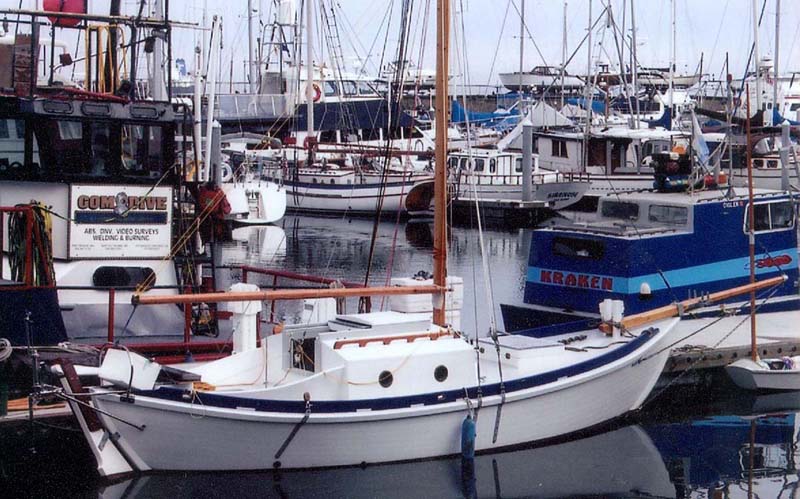
Unfinished. Hull, deck, cabin done. Prop shaft and stuffing box in. Much cabin interior done. Included is unopened suit of sails, mast and Lister diesel engine (condition unknown). Several other bits and pieces. $20,000. Email if you’re interested and have questions.
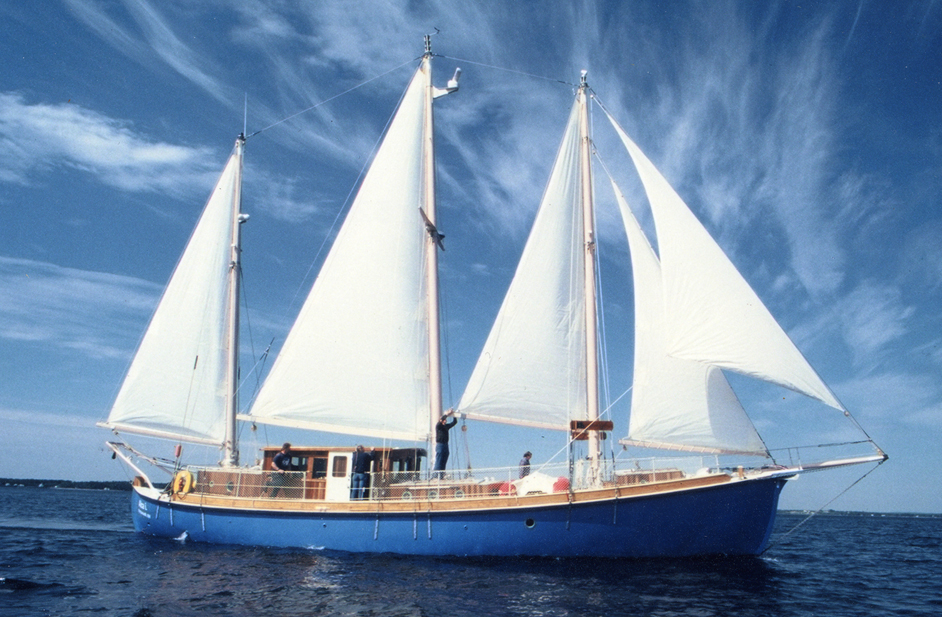 62′ 3 masted schooner “ALCA i”

102′ Long Range Power Cruiser concept.
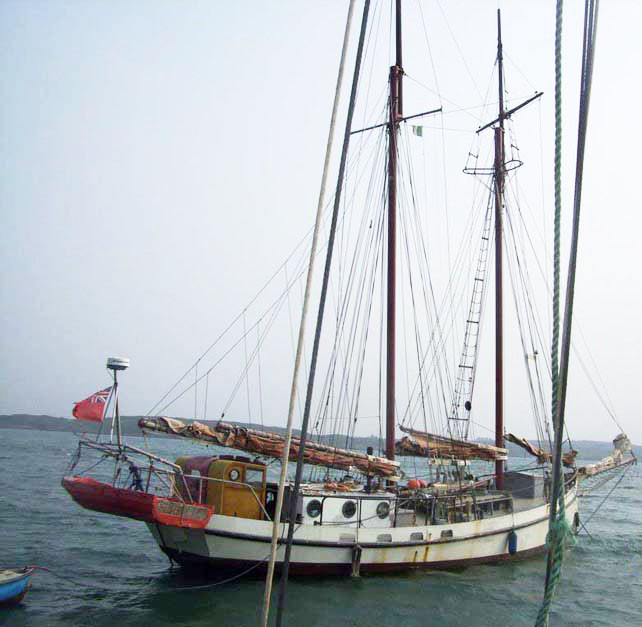
50′ MELQUIADES has been cruising the world since the 1990s. Here she is anchored off SW Ireland.
But first, look at The Animal Rescue Site. Click on it and a doggie gets a meal. It’s free!
Do it every day! You’ll feel good!
 |
 |
Ben and Crew crossed the NW Passage (above) in IDLEWILD. They then went on to circumnavigate the planet, including making the longest non-stop voyage ever made in a power yacht! Tough guys them Canadians, even if they do say “ay?” all the time. See more of her in the STOCK PLANS section, and check out their wonderful Web Site! And finally, Ben has published a book about the trip. You can order it here!
The Troller Yacht Book is back in print! You can order it as a hardcover book, an e-book, PDF, Kindle, and all those other formats out there. Go to George Buehler’s Books for ordering info and general NW lore!
 |
In the 1990’s, Reg Townsend designed a ship. I did some computer fairing on it and arguing with him and we did his design. Reg went to Malaysia and built her. Here’s a series of photos documenting something few of you will ever get a chance to see in this Brave New World; the building of a real wood ship! |
 JUNO sailing with a friend.
Congratulations to Seahorse Yachts and “Peking“, a 462 DIESEL DUCK, honored as People’s Choice Award “BEST IN SHOW” at the 2007 Mystic Trawlerfest. Check out diesel ducks for more info!
“I purchased #9 of the 462 series. For any potential buyers, this boat simply exceeds my expectations for a couple of reasons. I suppose the first would be Bill Kimley and his team in China who remain focused on utility and design (as opposed to price); George Buehler who is uncompromising in what his idea of a boat really is, but most importantly the owners of the other 462’s. I live in Point Roberts, WA and one owner (M/V David Ellis) actually drove from Seattle to Point Roberts to assess an electrical problem I was having (which turned out to be the marina’s).
I don’t have a lot of experience with smaller boats, but I am a captain of much larger ships and myself and two similarly qualified colleagues brought the 462 up from Ensenada, Mexico in late October. Despite the fact that we had weather that is probably pretty crumby by pleasure boats standards, I felt equally secure in this boat as I would in one of the ships that go up and down the coast on a regular basis”. —David King, 12/2010

 41-Plus Diesel Duck PEPI, by Asboat Yacht Building Ltd., in Turkey.
 |
 |
Ellemaid’s descrption and photos of Building, and more of Interior & Engine room.
Wheelhouse |
Engineroom |
 Ellemaid 2016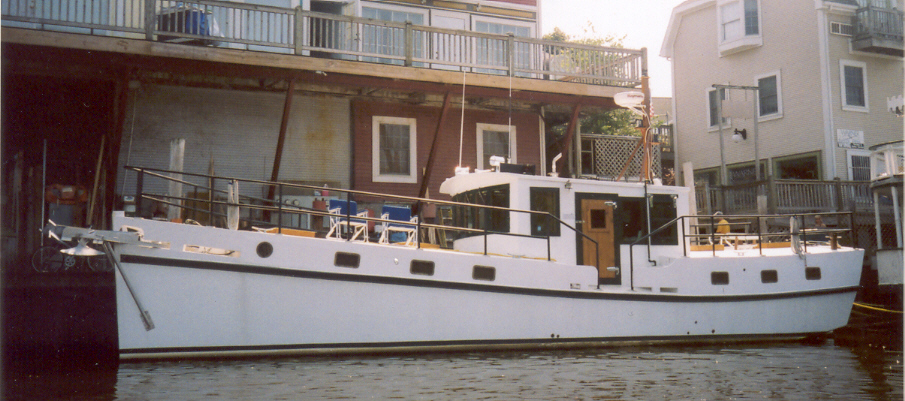
Forgive me but I was so impressed to see the job Harry & Vickie did on the 48 DUCK they built of wood that I have to show her off several times on my sites. You can see the whole Building this Ship photo essay at the Duck site. And, you can Click HERE to get to their “blog” where you can follow their trip south!
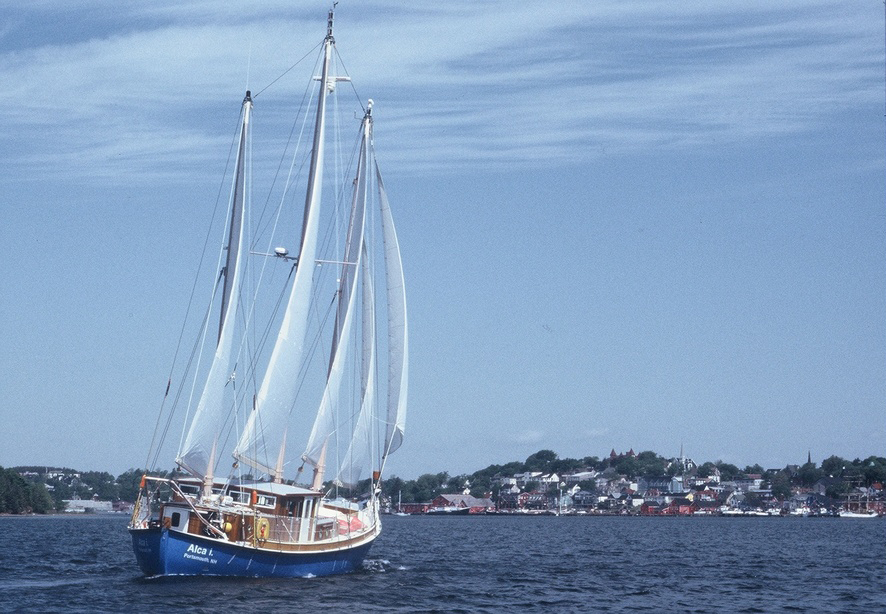
ALCA i, a research ship
 |
 |
BIG MEL is now a Scotland based charter sailing ship. More info at steady-sailing.com
 Henrik in Sweden built this fine little “EMILY”
I decided to devote an entire section solely to our Diesel Duck Family. They’ve been hatching out with different sizes and variations for some time now and suddenly were threatening to take over this site. Well, now they have their own department where they are ALL that is discussed. So, for all the Diesel Duck stuff, go to………Diesel Ducks Home
Hello. Thanks for checking in on my site here. I wish I could take credit for building it but I can’t. My pal, Cheryl Thompson who is, if you’ll forgive me sounding like a sexist pig, that delightful combination in some women of being both gorgeous and clever, built the original of this and laboriously taught me how to maintain and add to it. Since those days “the net” has exploded and now my sites are more read than my catalogs, and over the last couple years we’ve added all sorts of stuff. And now this year the sites have evolved into a very new look for this, “Our Main Site,” and the spin-off Diesel Ducks site. And even though there’s been such changes since the original, I am still in awe of the whole thing and think it’s incredible. I mean look; here you are wherever you are; Iowa, Pogo Pogo, Egypt; wherever, and you’re reading this! It still overwhelms me……
I absolutely hate slow loading sites loaded down with all sorts of PR. So we laid this out with plenty of PR about my stuff all right, but did it so should load rapidly, and be easy for you to skip about and read only what you want to read about. You see a Menu Bar somewhere close to here that gives you subjects you can read or see some detail about. Feel free to print them out if you’d like.
Another thing I hate is big sites like this that I look at now and then to see if there’s been any changes. Usually there hasn’t been…. So, what I’ve done here is note at the very top of the page the date of the last edit or addition. These will almost always be in the Photos & Drawings, Random Thoughts, or What’s New section. If you flip there you’ll see a date saying when the last change happened, starting with the next change I do to it. Seems this will make it easier for you to check back now and then if you’re interested in what we’re doing around here.
Anyway, scattered throughout this site you’ll see some drawings and photos of boats of my design. If you ‘click’ on them they’ll get bigger. I like all kinds of boats; there are no absolutes I’ve come to realize, and more important, no boat is ‘practical’. So lets not pretend; a boat is a toy, a fantasy, a thing to have fun with. If your fantasy is a 60′ gaff rigged schooner or a 12′ skiff or a cruising powerboat, that’s OK. Each is perfectly valid. That’s the bottom line, you see. Being valid for YOU. A boat is a statement of expression. Are you a rather timid, rigid, uptight, unimaginative and careful person with a new plastic production boat, or, are you a rugged individual, hair flowing in the breeze, billowing shirt, knowing deep inside that had you but been born 300 years ago, why, you’d be a swashbuckler, with a ‘one off’ boat. I’m sorry; but look. After watching several people I am close to go through some awful medical problems, I now concentrate on things that amuse or interest me. This site is written with that in mind. I’m very serious about some things, but being alive, well, it’s so brief, and fragile too, you know. Enjoy it! This site is about boats, boats that you can, while around them at least, simply tune out the stark unpleasantness that is lurking just around some not to distant corner.
There are of course some fine production boats out there. But the world of custom design is infinitely wider; not just my designs but many people’s designs stretching back for over a hundred or more years now (WOW have you ever stopped to ponder just how NEW ‘civilization’ and most technology and things we take totally for granted, actually IS???? I mean, how’s this; my dad lived in a sod house, until the family could afford to build the “real” house, on the ranch in North Dakota that his dad, my grandfather, homesteaded).
 |
Here’s my father on Comet, back in the 1930’s, on my grandfather’s farm and cattle ranch. Started with a sod hut homestead, in it’s prime the ranch was 24,000 acres, and the family did cattle drives “to the rail head” just like a John Wayne movie. Dad was in his 30s when this was shot. He always was a gay blade! |
This of course is a ‘commercial’ site in that its purpose to show, and hopefully sell, you on my yacht designs. No sense in pretending otherwise. So keep that in mind as you look over my stuff. I’m talking about my design services here. And, by the way, thanks! I appreciate your interest in my designs. If you have any questions or comments, please feel free to write or email me! You can telephone but I have very sporadic office hours although if you leave a message we’ll try to get back to you. Please, don’t ask me to define my business approach. But at least, we do have a lot of fun around here!!
If you telephone here you might be answered by The Lovely Susan who for 20 years held this place together, keeping track of orders, making sure we have whatever we need; books, paper, mailing supplies, meanwhile doing all the other things that simply overwhelm me but she can deal with. There’s an old saying that goes something like; “behind every successful man is a strong, smart, pushy woman.” I always thought Ronald Reagan was proof of that until one day I realized that without Gail I’d likely be in cut-offs laying about on a beach somewhere hyther & yon, and without Susan my office would be a disaster. So I’m proof of it too. Unfortunately the world changed. So much of what this office sends out is via email files requiring less and less printing. And of course Mr. Bush’s economy didn’t help either. So now days Susan comes and handles things when I’m out of town, but otherwise just comes in when I am overwhelmed. Like “reconciling” or whatever it’s called, our checking account.
 |
 |
Two of the many moods of TLS (The Lovely Susan)
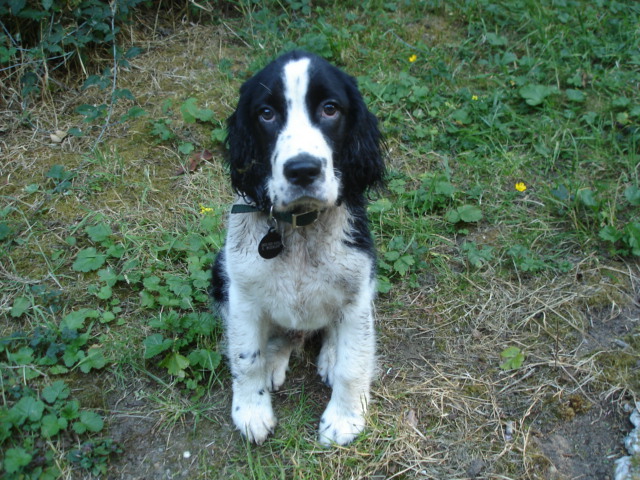
Baby Bodacious Buehler, 15 weeks old
 Greg Roscoe in Maine sent me this photo of the wood 48′ DIESEL DUCK he’s building.

Here’s Bodie (age 17 months) and Gail (you ask her about her age…) winning his Springer group at the Sept 2007 Gig Harbor Dog Show! Gail grooms and handles him and got getting pretty good at it!
You want more? Why, sure!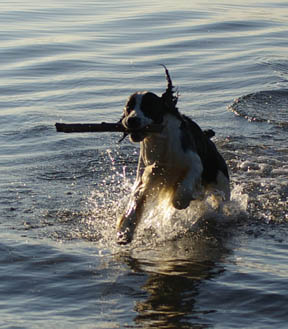

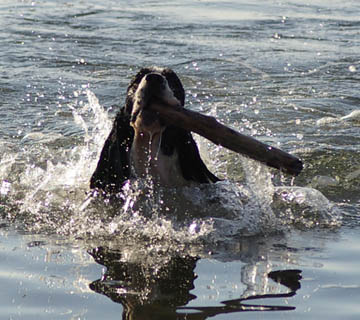
“Just Tryin’ to have a little fun, folks” – Dean Martin
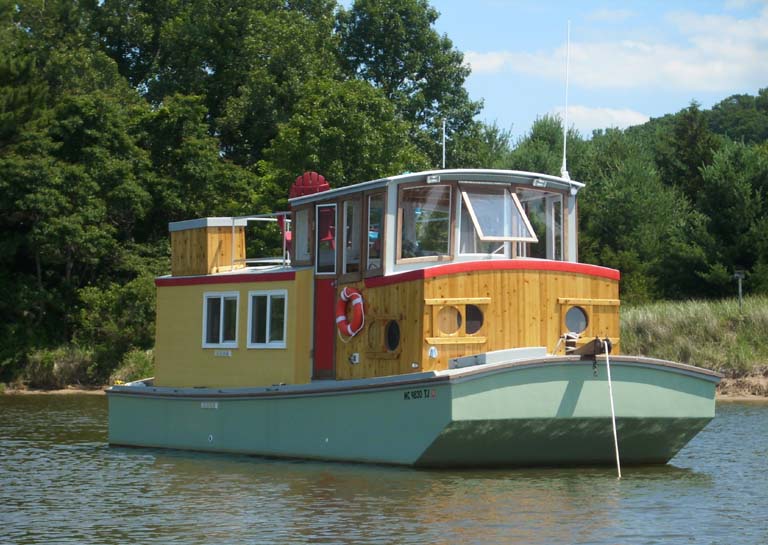 Cruising houseboat “River Walker“, planned out for the Columbia River!
Dan, in Sequim, WA, built this fine little HAGAR